Latest News
Degassing in Beverage Production: Why Dissolved Gases Affect Processes More Than Often Expected
Degassing in Beverage Production: Why Dissolved Gases Affect Processes More Than Often Expected
Dissolved gases affect more than individual measurement values – they can influence product preparation, mixing, carbonation, filling and further process steps.
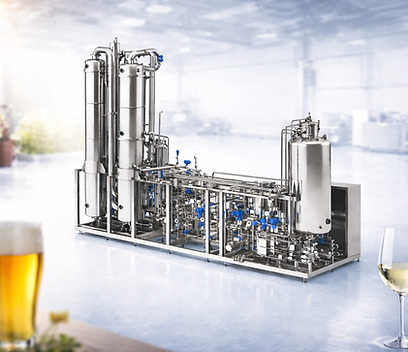
Degassing is a preparatory process step – especially for water, soft drinks, high gravity blending or dealcoholization, gas handling must fit the overall process.
Stable processes require controlled degassing and measurement – inline measurement of O₂ or CO₂ helps treat degassing not as an isolated step, but as part of process control.

Inline Measurement Instead of Snapshots: Why Lab Values Alone Do Not Stabilize Processes
Inline Measurement Instead of Snapshots: Why Lab Values Alone Do Not Stabilize Processes
Lab values remain important, but they are often snapshots – they show a condition at a specific point in time, but do not always explain where a deviation occurred in the process.
Inline measurement technology creates transparency during operation – parameters such as O₂, CO₂, alcohol, density, extract, Brix or original gravity can be measured directly at relevant process points.
Measurement values must be integrated into process control – only when measurement, automation and process steps work together does monitoring become stable process control.

Fermentation Stability in Brewing: When Yeast, Process Control and Measurement Values Do Not Align
Fermentation Stability in Brewing: When Yeast, Process Control and Measurement Values Do Not Align
Fermentation stability starts before fermentation – wort aeration, pitching temperature and yeast handling already influence whether the process can be controlled reproducibly.
Yeast quality requires controlled conditions – propagation, oxygen or sterile air supply and sterile process handling must work together.
Measurement values must be integrated into process control – inline measurement and automation help make critical deviations visible earlier and support more stable processes.
CO₂ control in beverage production: Why carbonation is more than a target value
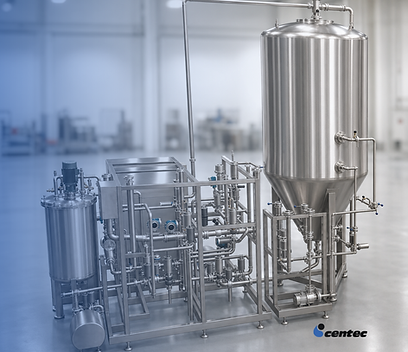
Carbonation is more than a CO₂ target value – it must be stabilized, measured and controlled within the process.
CO₂ is not just a target value in the finished product, but an active process parameter that must be controlled through gas injection, dissolution, pressure, temperature and product handling.
Stable carbonation requires coordinated process control – carbonation, blending, cooling, product flow and filling must be considered together to keep CO₂ reproducible in the product.
Inline measurement makes deviations visible early, before problems only appear during storage, filling or final inspection. This turns CO₂ control into part of process control rather than end-product testing.

Contamination despite CIP: when existing cleaning systems are not enough
If infections continue to occur despite intensive cleaning and disinfection, the problem usually lies deeper than the cleaning interval itself.
Recurring infections despite cleaning often point to deeper process problems.
Common causes are unfavorable plant design, lack of chemical control, and problematic flow conditions.
What matters is a plant-specific analysis with technical optimization, not just a routine cleaning response.

Oxygen in finished beer: why flavor loss often starts in the process
Rapid flavor loss, oxidation notes, and reduced shelf life often have one clear cause: oxygen uptake in the process.
Oxygen ingress leads to oxidation notes, cardboard flavor, and reduced shelf life.
Critical ingress points often occur during filtration, product transfer, and filling.
What works is a consistent overall approach combining monitoring, deaeration, and targeted process control.

Alcohol-free beer: when dealcoholization, aroma management, and process control must be considered together
Alcohol-free is not just a product idea. What matters is how dealcoholization, aroma management, and process stability are combined technically.
Dealcoholization requires more than simply removing alcohol.
Aroma behavior, CO2 behavior, and process control determine the result.
What matters is a technically robust overall concept.

Water quality in the brewery: when minerals, softening, and sterilization do not work together
Non-optimal mineral composition and contaminated water in operation are not side issues - they are direct process risks.
Water directly affects product quality, process stability, and hygiene.
The causes often lie in insufficient transparency about the actual water quality in operation.
What matters is a technically well-matched water-treatment concept.

Process quality in beverage production: how to control hidden risks systematically
Even small oxygen ingress can impair taste, shelf life, and product stability, and often remains unnoticed for too long during operation.
Oxygen has a direct impact on taste and shelf life.
Critical points are often located within the running process.
Monitoring and control are therefore essential.

Energy efficiency in beverage production: systematically identifying hidden losses
In beverage production, high energy costs are often not caused by a single weak point, but by many small losses across the entire process chain.
Losses often occur in many small places.
Boiler water, heat recovery, and process control are typical levers.
Efficiency requires systematic optimization.

Alcohol-free beverages: Preserving product identity without alcohol
The real challenge isn’t removing the alcohol itself—it’s preserving the original product’s sensory profile.
Product identity remains the real challenge.
Aroma, structure, and balance must be preserved.
Gentle dealcoholization is essential to achieve this.